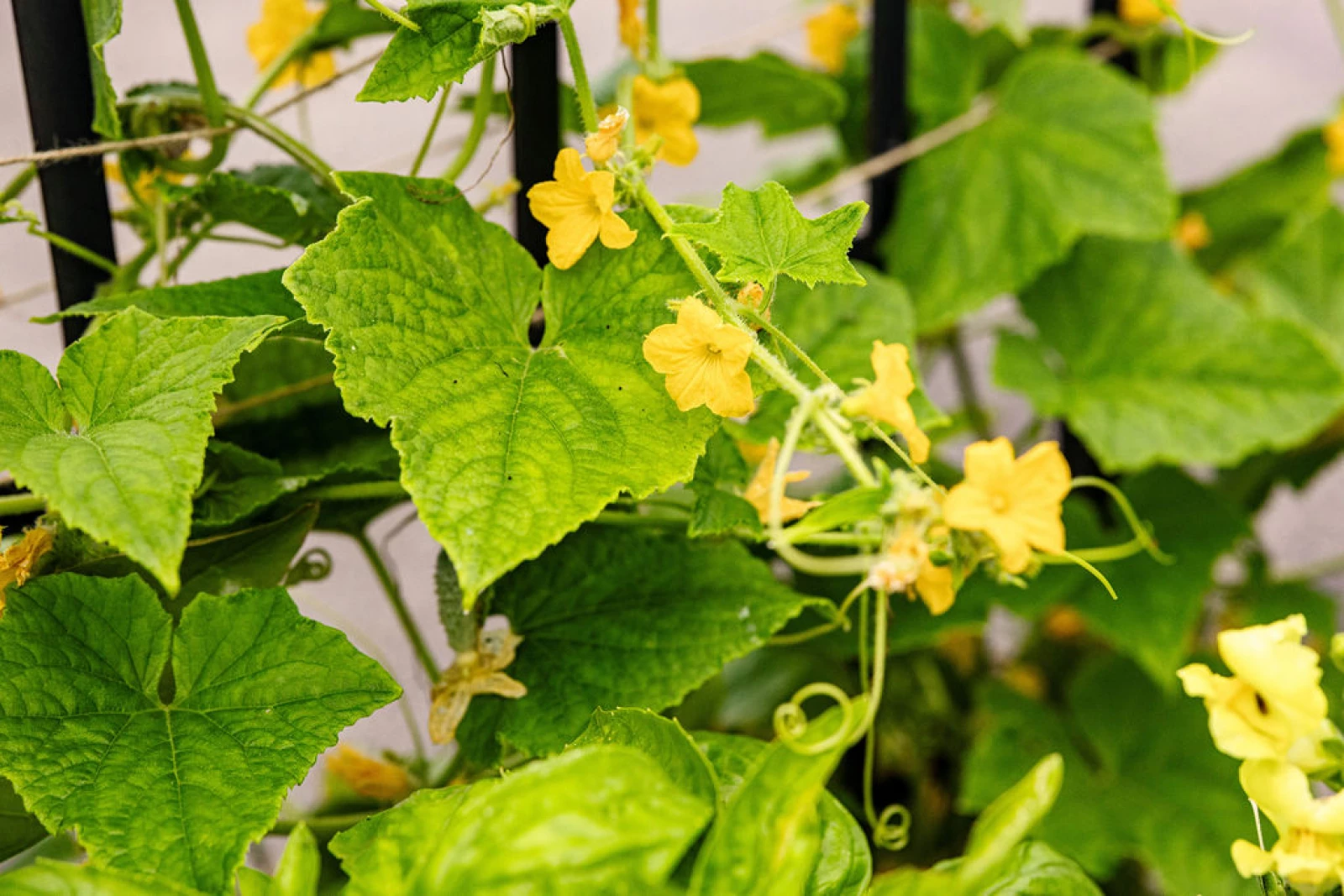
Few garden sights are as teasing as a lush cucumber vine covered in bright yellow blossoms that wither and drop off without leaving a single cucumber behind. If you are watching flowers open day after day with zero harvest to show for it, take heart: your plant is usually doing exactly what biology designed it to do—or reacting to a temporary weather or pollination hiccup you can easily fix.
Understanding why cucumber blossoms fail to turn into fruit starts with one quirk of the cucurbit family: most cucumber varieties produce two completely different kinds of flowers on the very same vine, and only half of them are capable of becoming cucumbers.
Male vs. Female Flowers: The First Check
Before troubleshooting soil, fertilizer, or pests, crouch down and look closely at the stem directly behind a freshly opened blossom.
-
Male flowers sit on a thin, straight, plain stem. Their sole job is to produce pollen, after which they naturally shrivel and fall off the vine. On standard cucumber varieties, the first 10 to 20 flowers to open are almost exclusively male—a built-in strategy to attract bees to the patch before the female blooms arrive.
-
Female flowers have a miniature, unfertilized cucumber (a swollen ovary) sitting right between the yellow petals and the vine. If pollinated, that tiny swelling grows into a full-sized cucumber. If it is not pollinated, the miniature fruit turns yellow, shrivels, and drops off.
Quick Diagnostic Table
| What You Are Observing | What Is Happening | Action Needed |
| Flowers on thin, straight stems drop off | Normal male bloom phase in early season | None—wait 1 to 2 weeks for female flowers to emerge |
| Tiny cucumbers behind flowers yellow and shrivel | Female flowers are not getting pollinated | Hand-pollinate, attract bees, or check greenhouse ventilation |
| Prolific blossoms during a heatwave, all male | High heat (above 32°C / 90°F) skews flower ratios | Water deeply, mulch, and wait for cooler nights |
| Giant dark-green vines with very few female blooms | Excess nitrogen fertilizer or heavy shade | Stop high-nitrogen feeding and ensure full sun |
| Curved, pinched, or knobby cucumbers | Incomplete pollination (only some seeds fertilized) | Improve bee access or hand-pollinate more thoroughly |
Main Reasons Cucumber Flowers Don’t Set Fruit
1. Normal Early-Season Male Blooms
Patience solves a huge share of “no fruit” complaints. Standard monoecious cucumber varieties spend their first week or two of blooming pushing out male blossoms. Seeing those early flowers drop is completely normal and not a sign of disease or poor soil.
2. Lack of Pollinators (or Trapped Greenhouse Blooms)
Traditional cucumbers rely on bees and other pollinating insects to carry sticky pollen from male flowers to female flowers. Cucumber blossoms only stay open and receptive for a single day—usually in the morning. Cold, rainy, or heavily overcast weather keeps bees in their hives, while growing under row covers, netting, or closed greenhouse doors physically blocks pollinators from reaching the blooms.
(Note: Modern “all-female” or parthenocarpic greenhouse cultivars set seedless fruit without pollination. If bees pollinate these specific greenhouse varieties, the resulting fruit can actually turn bitter or misshapen—which is why UK growers often remove male flowers on greenhouse types. Check your seed packet to know which type you are growing.)
3. Summer Heatwaves
Cucumbers love warmth, but extreme heat disrupts fruiting in two ways. When daytime temperatures climb past 32°C (90°F) and nights stay above 21°C (70°F), cucumber plants temporarily stop producing female flowers and push out mostly male blossoms instead. At the same time, bees become sluggish in intense heat and pollinate far less actively.
4. Too Much Nitrogen Fertilizer
Feeding cucumbers with high-nitrogen lawn or general-purpose fertilizer builds massive, lush green leaves at the expense of female flowers and fruit.
5. Moisture Stress or Crowded Vines
Cucumbers are roughly 95% water and have shallow feeder roots. Letting the soil dry out during flowering causes the plant to abort female blossoms to conserve energy. Planting vines too closely together also creates deep shade that reduces flowering.
6. Over-Mature Fruits Left on the Vine
If even one cucumber is missed under the leaves and grows huge and yellow, the vine receives a hormonal signal that its seed-producing job is done—and slows or halts new female flower development.
How to Get Your Cucumbers Fruiting
-
Hand-pollinate in the morning. If bees are scarce, pick a freshly opened male flower, gently peel back its yellow petals to expose the pollen-covered anther in the center, and dab it directly onto the sticky stigma inside the center of a female flower. Alternatively, use a small, clean artist’s paintbrush to transfer pollen between blooms before midday.
-
Invite bees into the garden. Plant nectar-rich companions like borage, cosmos, zinnias, or lavender nearby, and open greenhouse vents and doors wide on sunny mornings.
-
Water deeply and consistently. Keep soil evenly moist—aiming for roughly 2.5 cm (1 inch) of water per week in garden beds, and daily watering for containers in hot weather. Water at the base of the plant in the morning, and spread a 5 to 8 cm (2 to 3 inch) layer of straw or compost mulch to prevent moisture swings.
-
Switch to a balanced or potassium-rich feed. Once vines start flowering, avoid high-nitrogen fertilizers. Use a balanced organic vegetable fertilizer or a tomato/potash feed according to label rates.
-
Harvest early and often. Pick cucumbers every couple of days while they are still young, firm, and bright green so the vine keeps producing new blossoms.
Regional Growing Notes
-
UK: Many UK gardeners grow parthenocarpic (all-female) greenhouse varieties such as ‘Carmen’ or ‘Telegraph Improved’. These set fruit without pollination; keep greenhouse vents netted if possible, and pinch out any occasional male flowers on those varieties so bees don’t fertilize them and cause bitter fruit. Outdoor ridge cucumbers, by contrast, require bee pollination.
-
USA & Canada: Most outdoor slicing and pickling varieties rely on bees. During July and August heatwaves in the South, Midwest, or Prairie provinces, temporary male-only blooming is common—rigging lightweight shade cloth (30%) and keeping soil mulched helps vines ride out the heat until cooler nights return.
-
Australia: In warm northern and coastal regions, extreme summer heat and fruit fly netting can limit pollination. Use hand-pollination beneath insect exclusion netting, and select heat-tolerant or gynoecious (predominantly female) cultivars for midsummer plantings.
Common Mistakes to Avoid
-
Spraying broad-spectrum insecticides during the day: Even organic sprays like spinosad or pyrethrins can harm bees if applied while flowers are open. If pest control is genuinely necessary for cucumber beetles or aphids, apply an approved product registered for edible crops in your region (EPA in the USA, HSE in the UK, PMRA in Canada, or APVMA in Australia) late in the evening after blooms have closed and pollinators have returned to their hives.
-
Pulling up healthy vines too early: If your plant is vigorous and flowering, give it two weeks—the female flowers are often just days behind the initial male wave.
-
Overhead evening watering: Wetting cucumber leaves late in the day encourages powdery mildew and downy mildew, which weaken vines and cut yields.
When to Seek Local Gardening Help
If your cucumber vines have distorted, yellow-mottled leaves alongside stunted, bumpy fruit, they may be infected with Cucumber Mosaic Virus (spread by aphids), which has no cure and requires removing the plant. For confirmed disease diagnostics or local variety recommendations, contact your local university extension office or Master Gardener helpline (USA and Canada), the Royal Horticultural Society (RHS) advisory service (UK), or state agricultural departments and specialist nurseries (Australia).
Frequently Asked Questions
How long after flowering do cucumbers appear?
Once a female flower is pollinated, you will see the tiny cucumber behind the blossom begin swelling within 2 to 4 days, reaching harvest size in roughly 7 to 14 days depending on the variety and weather.
Should I pinch off the male flowers on my cucumber plant?
Only if you are growing an all-female (parthenocarpic) greenhouse variety where pollination causes bitter fruit. For all standard outdoor slicing and pickling cucumbers, leave the male flowers alone—you need their pollen to produce fruit.
Why are my cucumbers growing curved or fat on one end?
Crooked or bulb-ended cucumbers are a classic sign of incomplete pollination—bees visited the flower briefly, fertilizing only some of the seeds inside. The fruit is completely safe and tasty to eat; hand-pollinating future blooms will help them grow straight.
Can cucumbers pollinate themselves with the wind?
No. Unlike tomatoes or corn, cucumber pollen is heavy and sticky, so wind alone cannot move it effectively. Either insects or a gardener’s paintbrush must transfer the pollen from male to female blossoms.
Reliable Sources and Further Reading
-
University of Minnesota Extension – Growing Cucumbers in Home Gardens for male vs. female blossom identification, watering needs, and harvesting tips.
-
University of Minnesota Extension – How Excessive Heat Affects the Vegetable Garden for how temperatures above 90°F alter flower ratios and bee activity.
-
Clemson Cooperative Extension (HGIC) – Cucumber Factsheet for early-season male bloom timelines and hand-pollination guidance.
-
Royal Horticultural Society (RHS) – How to Grow Cucumbers for UK-specific advice on greenhouse vs. outdoor ridge cucumbers.
