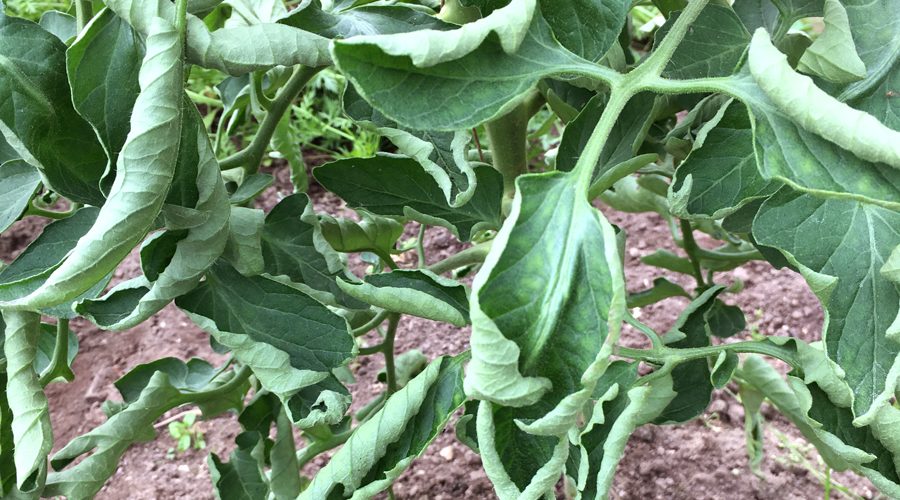
Spot a row of tightly rolled leaves on your tomato vines in mid-summer, and it is hard not to assume the worst. Before you reach for a sprayer or pull the plant out of the ground, take a closer look. More often than not, a curled tomato leaf is simply a stressed plant trying to conserve water—and it will still hand you a full harvest.
The catch is that leaf curl is a symptom, not a single diagnosis. Heat, erratic watering, aphids, herbicide drift, and plant viruses can all bend a leaf out of shape. The secret to fixing it is learning to read how the leaf is curling before you change a single thing in your garden.
Reading the Curl: What the Leaf Shape Tells You
Experienced tomato growers don’t just look at whether a leaf is curled; they look at the direction of the roll, the texture of the foliage, and where on the plant it started.
| What You See | Where It Starts | Leaf Texture & Color | Most Likely Culprit |
| Upward lengthwise roll (edges fold in like a taco or tube) | Older, lower leaves first | Firm, thick, leathery; normal green color | Physiological leaf roll (heat, moisture, or pruning stress) |
| Twisted, cupped, or C-shaped curls (tips curl inward too) | Newest growth at the top of the plant | Rubbery, distorted; cannot be flattened normally | Herbicide drift or contaminated compost/manure |
| Downward cupping with sticky residue | Tender young shoots and undersides | Soft, slightly wilted, sometimes speckled | Sap-sucking pests (aphids, whiteflies, or thrips) |
| Curled, mottled, or shoestring-thin leaves | Spreading across young and old growth | Yellow-and-green mottling, purpling veins, or stunting | Viral infection (e.g., Curly Top, Mosaic, or Yellow Leaf Curl) |
The Five Real Culprits Behind Curled Tomato Leaves
1. Physiological Leaf Roll (The Most Common—and Least Dangerous)
When temperatures climb, soil moisture swings wildly, or you prune away too much foliage at once, tomato plants roll their lower leaves upward and inward. By curling up, the plant reduces the surface area exposed to hot sun and wind, slowing water loss.
Indeterminate (vining) tomatoes and high-yielding cultivars are far more prone to this than compact determinate varieties. The rolled leaves often feel stiff and leathery, and they may never uncurl completely—even after the weather cools. The reassuring part? Physiological leaf roll does not normally reduce fruit yield or flavor.
2. Water and Root-Zone Extremes
Tomatoes crave steady, even moisture. A long dry spell triggers upward rolling as roots struggle to keep up with afternoon heat. Surprisingly, too much water produces the exact same look. When heavy clay beds or poorly drained containers stay waterlogged, roots suffocate and stop absorbing water effectively, causing the foliage above to curl in protest.
3. Herbicide Drift or Contaminated Compost
Tomatoes are exquisitely sensitive to broadleaf weedkillers such as 2,4-D and dicamba. On a breezy day, spray drifting from a neighbor’s lawn or a nearby farm can twist tomato leaves into tight, rubbery C-shapes—even when no other plant in your yard shows a mark.
Watch out for hidden sources, too: grass clippings from a recently treated lawn, or manure from livestock that grazed on herbicide-treated pasture, can carry persistent herbicide residues straight into your compost pile and tomato beds.
4. Sap-Sucking Pests
Flip a curled leaf over and look closely along the midrib. Clusters of tiny pear-shaped aphids, clouds of whiteflies, or minuscule thrips pierce leaf tissue and drink plant sap, causing young leaves to pucker, cup downward, and distort. Beyond the physical feeding damage, these insects are the primary carriers of tomato viruses.
5. Viral Diseases
Viruses like Tomato Yellow Leaf Curl Virus, Curly Top Virus, and Tomato Mosaic Virus cause severe curling paired with unmistakable red flags: bright yellow mottling, purple-tinged veins, stunted height, or leaves that narrow into strange “shoestring” shapes. Unlike environmental stress, viral leaf curl never improves with better watering.
What to Do Right Now (Based on What You Found)
Skip the guesswork and match your next move to the actual cause:
-
If it’s physiological leaf roll: Check the soil 5 cm (2 inches) down. Water deeply if it is dry, or hold off if it is soggy. Spread a 5 to 8 cm (2 to 3 inch) layer of straw or shredded leaf mulch to keep root temperatures and moisture steady, and put the pruning shears away for a few weeks.
-
If you find pests: Blast aphids off the undersides of leaves with a firm jet of water from the garden hose—often all it takes for a light infestation. Encourage natural predators like lady beetles and lacewings. If a heavy outbreak requires intervention, use an insecticidal soap or horticultural oil explicitly registered for edible crops in your region (EPA-registered in the USA, HSE-approved in the UK, PMRA-registered in Canada, or APVMA-registered in Australia) and follow the label’s pre-harvest interval strictly.
-
If you suspect herbicide damage: There is no cure or antidote. If exposure was very mild, the plant may eventually push out normal new growth. However, if the plant is heavily distorted or exposed to herbicides like dicamba close to harvest, extension specialists advise removing the plant and not eating the fruit, as chemical residues can remain in the tissue.
-
If it’s a viral infection: Pull the infected plant out immediately and bag it for household trash—never add it to your home compost. Wash your hands and disinfect your pruners with rubbing alcohol before touching healthy tomato vines.
Regional Factors to Keep in Mind
Where you garden shapes which trigger hits your tomatoes hardest:
-
USA & Canada: In the Midwest, Plains, and agricultural regions, herbicide drift from neighboring lawns or fields is a frequent summer headache. In arid western states, intense heat and leafhopper-borne Curly Top Virus are common culprits.
-
UK: Tomatoes grown in greenhouses often curl in late spring and early summer because of sharp swings between hot, sunny days and chilly nights. Opening vents early, adding temporary shading paint or blinds, and avoiding storing lawn “weed and feed” products inside the greenhouse solves most UK cases.
-
Australia: Blistering summer heatwaves (above 35°C / 95°F) and dry winds make physiological leaf roll and whitefly-spread viruses common. Rigging up 30% to 50% shade cloth during extreme heat and watering deeply in the early morning keeps vines producing.
Habits That Prevent Leaf Curl Next Season
A few simple shifts in how you grow tomatoes will cut down leaf curl dramatically—and save you from common traps like over-fertilizing or hacking off healthy foliage:
-
Water on a rhythm, not a whim. Aim for roughly 2.5 cm (1 inch) of water per week delivered slowly at the base of the plant, adjusting upward during heatwaves or for containers. Avoid letting soil bake dry and then flooding it.
-
Go easy on nitrogen. Excess nitrogen forces soft, rapid leaf growth that curls easily and attracts aphids. Stick to a balanced tomato feed once the first fruits set.
-
Prune lightly. Removing a few lower suckers for airflow is fine, but stripping away large amounts of foliage in mid-summer shocks the plant and exposes remaining leaves to sudden sun stress.
-
Pick resistant varieties. Look for disease-resistance codes on seed packets (such as TYLCV or TMV) and consider determinate cultivars if physiological leaf roll bothers you visually.
-
Leave curled leaves alone. Unless a leaf is diseased or yellowing, do not snip off curled green foliage—it is still photosynthesizing and shading your ripening fruit from sunscald.
When It’s Time to Call In an Expert
If your entire tomato patch is curling, stunting, and yellowing despite steady watering and no visible pests, it is worth getting a confirmed diagnosis before replanting the same bed next year. In the USA and Canada, local Master Gardener helplines and university extension plant clinics can distinguish between tricky viral infections and subtle herbicide injury. In the UK, the Royal Horticultural Society (RHS) offers member advisory services, while Australian gardeners can consult state agricultural departments or specialist local nurseries.
Quick Answers to Common Questions
Will curled tomato leaves ever flatten back out?
Usually not. Once physiological leaf roll makes older leaves thick and leathery, they tend to stay rolled for the rest of the season. Instead of watching old leaves, look at the newest growth at the top of the vine—if fresh leaves unfurl flat and green, the stress has passed.
Does leaf curl mean my tomatoes won’t produce fruit?
Not if it is physiological leaf roll. Plants with rolled lower leaves still flower, set fruit, and ripen normally. Only viral infections, severe herbicide injury, or heavy unchecked pest outbreaks will seriously slash your harvest.
Can I eat tomatoes from a plant with curled leaves?
If the curl is caused by heat, watering, or aphids, the fruit is completely safe to eat. If you suspect broadleaf herbicide drift (like 2,4-D or dicamba), avoid eating the fruit, as herbicide residues are not approved for consumption in tomatoes.
Why are only my heirloom tomatoes curling while my cherry tomatoes look fine?
Cultivar genetics play a big role. Many large-fruited indeterminate heirlooms are naturally far more prone to physiological leaf roll than vigorous cherry or determinate varieties growing right next to them.
Reliable Sources and Further Reading
-
South Dakota State University Extension – Why Are My Tomato Leaves Curled Up? for clear visual distinctions between physiological leaf rolling and herbicide drift.
-
University of Minnesota Extension – Tomato: Curled, Distorted, or Unusually Shaped Leaves for side-by-side diagnostics covering aphids, viruses, abiotic leaf roll, and herbicide injury.
-
Royal Horticultural Society (RHS) – Tomato Leaf Problems for UK-focused advice on greenhouse temperature swings, ventilation, and weedkiller contamination.
-
UC Agriculture and Natural Resources (UC IPM) – Tomato Leaves Curling? for integrated pest management strategies and viral disease identification.
