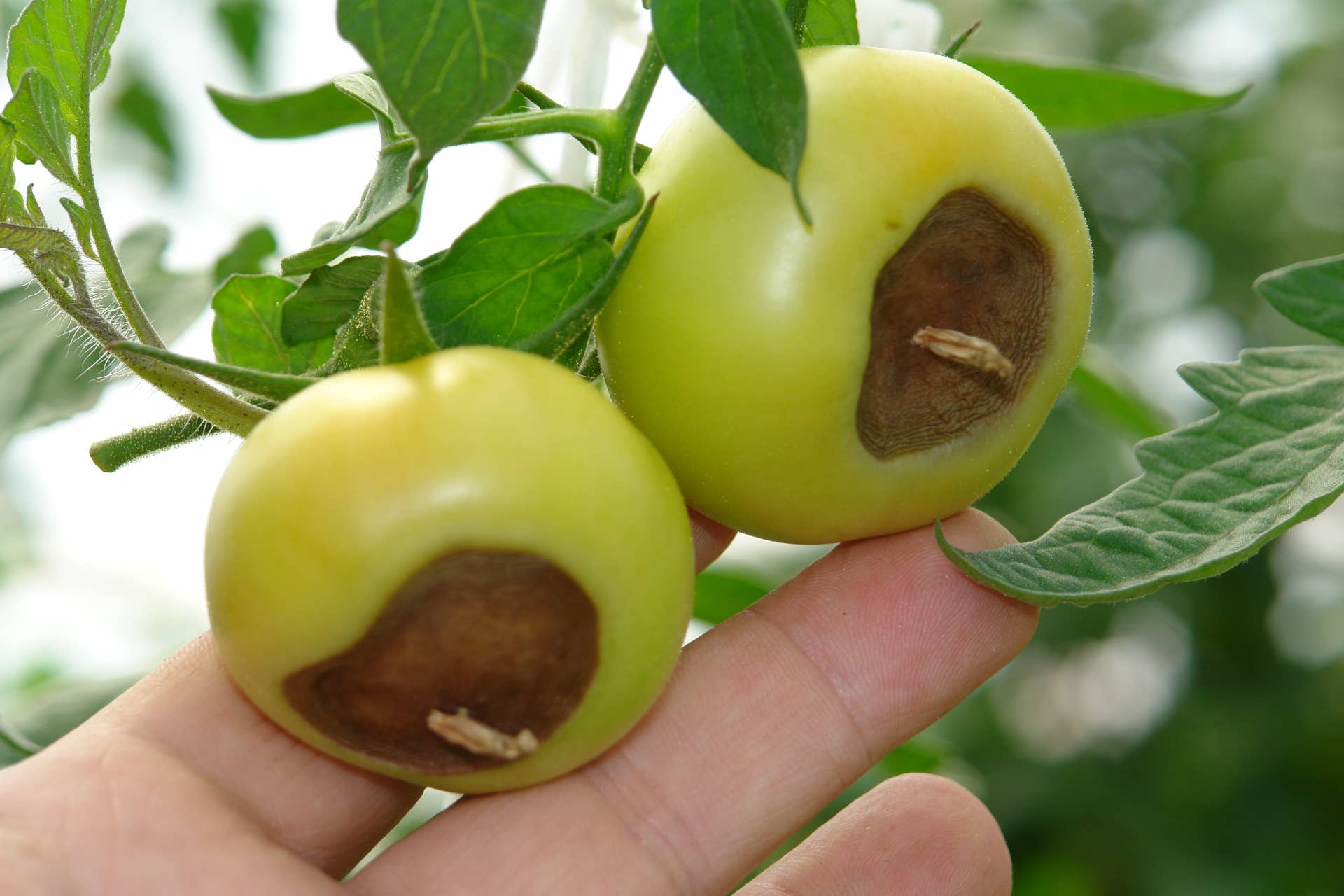
You have nurtured your tomato vines for months, watched the first green fruits swell, and then—right as they approach ripening—a flat, leathery black patch appears on the bottom of every tomato. It looks like a devastating fungal rot, and many gardeners immediately reach for a fungicide or start crushing eggshells into the soil.
Neither of those will fix it. Blossom end rot is not a disease at all. It is a physiological disorder caused by a localized shortage of calcium inside the developing fruit. More importantly, the problem is rarely a lack of calcium in your garden soil—most soils and potting mixes already have plenty. Instead, something has disrupted the plant’s ability to move that calcium from the roots up to the fruit.
Is It Really Blossom End Rot?
Before changing your care routine, make sure you are not looking at a fungal rot, sunscald, or pollination scarring. Blossom end rot affects only the fruit—never the leaves or stems—and always starts at the bottom (the blossom end, opposite the stem). It begins as a small, water-soaked tan spot that gradually enlarges, flattens, and turns dark brown or black with a dry, leathery texture. Secondary molds sometimes move into the dead tissue afterward, making it look fuzzy.
Use this quick comparison to rule out lookalikes:
Why Calcium Isn’t Reaching Your Tomatoes
Calcium is a slow-moving nutrient. It travels exclusively in water pulled up through the plant’s roots and stems (the transpiration stream). Anything that interrupts steady water flow—or pushes the plant to grow faster than its roots can supply calcium—triggers blossom end rot.
-
Rollercoaster soil moisture: Letting soil bake dry and then flooding it is the number one trigger. Dry spells halt calcium uptake completely, while waterlogged soil suffocates roots so they stop absorbing nutrients.
-
Heavy nitrogen or potassium feeding: Pushing lush, rapid vine growth with high-nitrogen fertilizers (especially ammonium-based nitrogen) diverts calcium into expanding leaves instead of fruit, and excess ammonium, potassium, or magnesium directly competes with calcium at the roots.
-
Root damage: Hoeing or cultivating deeply within 30 cm (1 foot) of the tomato stem slices off the fine feeder roots responsible for absorbing water and calcium.
-
High humidity or sudden heatwaves: Very humid, cloudy weather slows water evaporation from leaves, stalling the upward pull of calcium. Conversely, extreme heat accelerates fruit expansion faster than calcium can arrive.
-
Variety susceptibility: Large beefsteak slicers and elongated paste/plum tomatoes (like ‘Roma’ or ‘San Marzano’) are far more prone to blossom end rot than small cherry tomatoes. Often, only the very first flush of fruit is affected while later trusses ripen cleanly.
What You Can Fix Today (and What You Can’t)
Let’s clear up the hardest truth first: you cannot heal a tomato that already has blossom end rot. Pick affected fruits off the vine right away. They will not recover, and removing them redirects the plant’s energy into the next set of healthy blossoms.
To protect every tomato still forming on the vine, take these steps immediately:
-
Lock in steady soil moisture. Water deeply and consistently at the base of the plant so the root zone stays evenly damp—never bone dry, never swampy. In-ground beds generally need about 2.5 to 3.8 cm (1 to 1.5 inches) of water per week, split into two or three deep soakings. Containers and grow-bags dry out much faster and often need watering once—or even twice—a day during hot spells.
-
Mulch the root zone. Spread a 5 to 8 cm (2 to 3 inch) blanket of straw, shredded leaves, or well-rotted compost around the base of the plants to buffer soil moisture and keep roots cool.
-
Ease off the fertilizer. Stop applying high-nitrogen feeds. If you use a liquid tomato feed, apply it only to already-moist soil and never exceed the label rate.
-
Keep tools away from the roots. Pull weeds near tomato stems by hand rather than digging with a hoe.
-
Ventilate greenhouses. If you grow under glass or polythene, open doors and vents wide during the day to prevent stagnant, overly humid air from slowing water uptake.
Myths That Waste Your Time
Blossom end rot attracts more folk remedies than almost any other vegetable problem. Skip these common detours:
-
Calcium foliar sprays: Sprays marketed to “stop blossom end rot fast” are widely sold, yet horticultural research consistently shows they do not work. Calcium cannot move from sprayed leaves into the fruit, and tomato skin absorbs virtually none of it directly.
-
Crushed eggshells or antacid tablets: Eggshells take months—often years—to break down in soil, so tossing them into a planting hole does nothing for this season’s crop.
-
Epsom salts (magnesium sulfate): Adding magnesium actually worsens blossom end rot because magnesium competes directly with calcium for uptake by tomato roots.
-
Fungicides: Because no fungus causes blossom end rot, spraying fungicides is completely unnecessary.
Regional Growing Considerations
How you prevent blossom end rot depends heavily on how and where you grow:
-
UK: Many UK gardeners grow tomatoes in grow-bags or small pots inside greenhouses, where compost dries out rapidly on sunny afternoons and is notoriously difficult to rewet evenly once dry. Switching to larger pots (at least 30 cm / 12 inches wide), installing a simple drip or capillary watering system, or growing directly in greenhouse border soil makes moisture control far easier.
-
USA & Canada: In regions with naturally acidic soils (such as parts of the US Southeast, Pacific Northwest, or Eastern Canada), a soil pH below 6.0 can genuinely limit calcium availability. Run a soil test in autumn or early spring and apply agricultural lime only if recommended. During hot Midwest or southern summers, drip irrigation on a timer paired with thick straw mulch is the most reliable defense.
-
Australia: Intense summer heatwaves and dry winds can dehydrate potted and in-ground tomatoes within hours. In sandy coastal soils that become water-repellent (hydrophobic), apply an organic soil wetter before mulching, and water deeply in the early morning so plants enter midday heat fully hydrated.
If a laboratory soil test does confirm low soil calcium or low pH and you apply agricultural lime or gypsum, follow the test’s exact application rate and product label directions—over-applying amendments can throw off soil pH and lock up other nutrients.
When to Seek Local Expert Help
If you have maintained even soil moisture, avoided over-fertilizing, and still lose most of your harvest to rot—or if dark lesions are spreading onto the leaves and stems—you may be dealing with a true fungal or bacterial disease (such as late blight or anthracnose) or a severe soil pH imbalance. In the USA and Canada, your local university extension office or Master Gardener helpline can run a soil test or diagnose fruit samples. UK gardeners can use the Royal Horticultural Society (RHS) advisory service, and Australian growers can consult state agricultural departments or local specialist nurseries.
Frequently Asked Questions
Can you eat a tomato with blossom end rot?
Yes, as long as the rest of the tomato is firm and free of secondary mold or sour odors. Simply slice off the blackened bottom section and use the healthy upper portion.
Will my tomato plant recover and produce normal fruit later?
Yes. Blossom end rot is most common on the first set of fruit in early summer. Once you stabilize watering and mulch the soil, subsequent trusses on the very same vine usually develop and ripen without a mark.
Should I add gypsum or lime to my soil right now?
Only if a soil test shows your soil is actually deficient in calcium or overly acidic. In most gardens, soil calcium is already adequate, and fixing watering consistency solves the problem much faster.
Why do my potted tomatoes get blossom end rot more than my garden-bed tomatoes?
Containers hold a limited volume of potting mix that heats up and dries out much faster than open ground. Those rapid wet-and-dry cycles interrupt calcium delivery to the fruit far more frequently.
The Bottom Line for Your Harvest
Fixing blossom end rot rarely requires buying a bottle of calcium spray or amending your soil. Pull off the damaged early fruits, lay down a generous layer of mulch, and commit to steady, deep watering that keeps the root zone evenly moist. Once the water supply levels out, your tomato vines will do the rest—delivering clean, unblemished fruit for the remainder of the season.
Reliable Sources and Further Reading
-
Royal Horticultural Society (RHS) – Blossom End Rot: How to Stop It for UK-focused advice on grow-bags, greenhouse ventilation, and why foliar calcium sprays fail.
-
University of Minnesota Extension – Tomato Disorders for distinguishing blossom end rot from sunscald, catfacing, and growth cracks.
-
Clemson Cooperative Extension (HGIC) – Gardening Myths: Fix Blossom End Rot with Calcium Sprays and Tomato Diseases & Disorders for science-backed guidance on soil moisture, drip irrigation, and soil testing.
