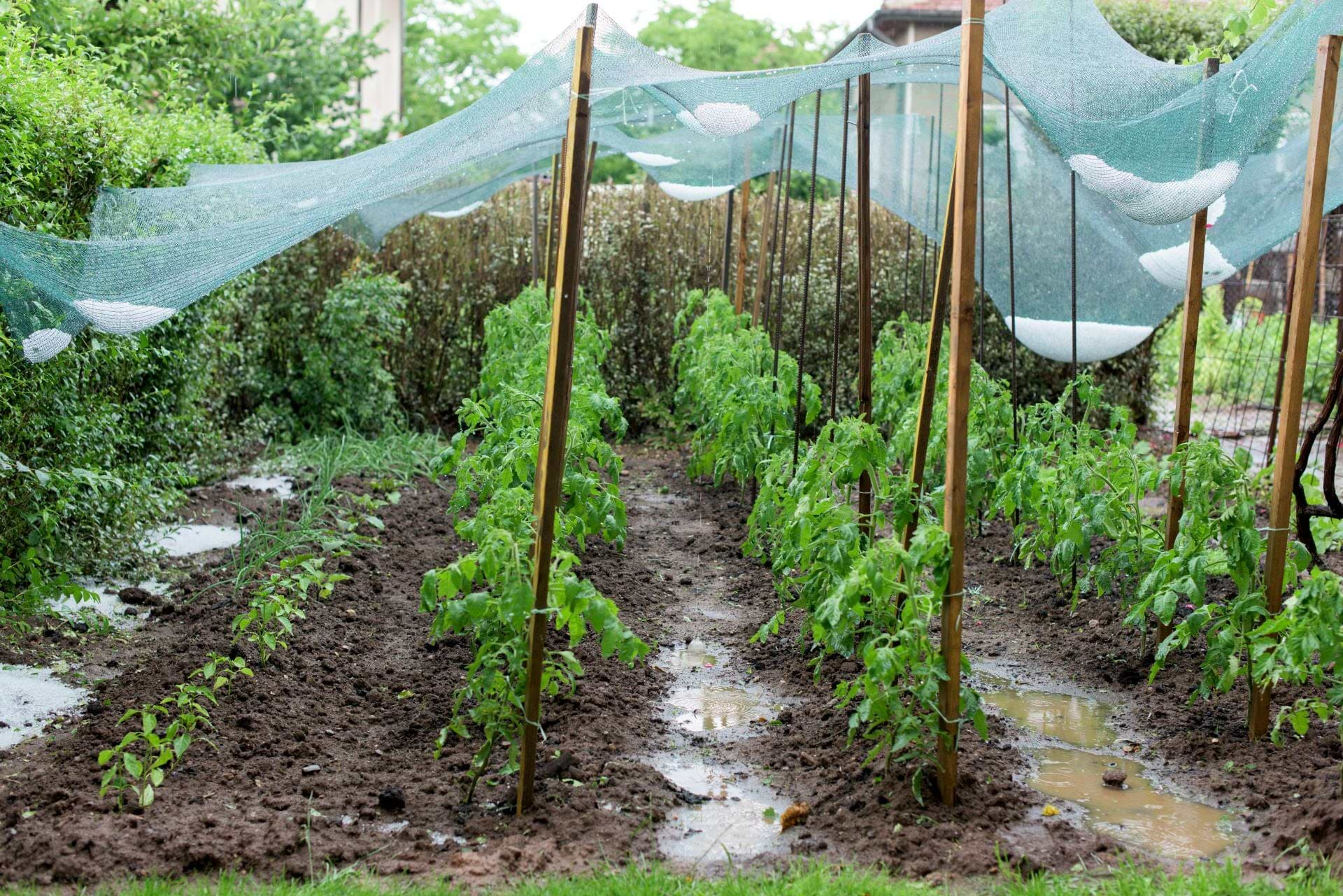
Strong winds do far more than knock over a few terracotta pots. Even a steady breeze can strip moisture from foliage faster than roots can replace it, shred tender leaves, and rock newly planted shrubs back and forth until their roots pull loose from the soil. In exposed yards, coastal gardens, and open balconies, wind is often the quiet reason plants stay stunted or scorched despite good soil and regular watering.
Protecting outdoor plants from wind is not about wrapping your garden in plastic or building fortress-like walls. In fact, solid barriers often make wind damage worse by creating violent gusts on the other side. Effective wind protection combines smart physical support, moisture management, and semi-permeable shelter that slows moving air down rather than trying to block it completely.
Common Signs of Wind Damage
Wind injures plants both physically and by drying them out. Recognizing the early symptoms helps you intervene before permanent dieback sets in:
-
Wind scorch (desiccation): Leaf edges turn brown, dry, and crispy—especially on the side of the plant facing the prevailing wind. Broad-leaved evergreens (like rhododendrons, camellias, and laurel) and Japanese maples are particularly susceptible.
-
Torn, tattered, or blackened leaves: Soft-leaved perennials, hostas, bananas, and vegetable crops develop shredded foliage or bruised, dark patches where leaves whip against stems or stakes.
-
Windrock: Tall or top-heavy plants with shallow roots sway repeatedly, opening a visible gap or pocket in the soil right around the base of the stem.
-
Leaning stems and uprooted plants: Newly planted trees, tall perennials (such as delphiniums and dahlias), and plants in saturated soil tip over or lift out of the ground.
-
Stunted, lopsided growth: In persistently windy sites, shrubs and trees grow noticeably shorter and lean away from the direction of the prevailing wind.
Telling Wind Damage Apart From Similar Problems
Because browned leaf edges can look like drought, frost, or disease, compare the pattern carefully:
Main Causes of Wind Damage
-
Wind tunnels and solid barriers: Narrow gaps between houses, garages, and solid wooden fences funnel and accelerate wind. Solid walls force wind up and over the top, creating turbulent downdrafts on the sheltered side that can snap stems.
-
Saturated or shallow soil: Heavy rain softens soil and reduces its grip on roots. Young trees and shallow-rooted shrubs are far more likely to uproot when high winds follow a wet spell.
-
Top-heavy containers: Tall plants in lightweight plastic pots act like sails, tipping easily on patios and balconies.
-
Weak branch structure: Trees with narrow, V-shaped branch crotches or co-dominant leaders (two main trunks competing for the center) split easily under storm gusts.
-
Rapid moisture loss: Moving air strips away the thin layer of humid air surrounding each leaf. When soil is frozen in winter or dry in summer, roots cannot pump water fast enough to keep up, causing leaves to scorch.
How to Identify Your Garden’s Wind Risks
Before buying stakes or fencing, spend a few minutes mapping how wind actually moves through your yard:
-
Note the prevailing wind direction: Watch which way tree branches lean or tie a few strips of cloth to stakes around the garden on a breezy day.
-
Spot the turbulence zones: Pay attention to corners of buildings, gaps between structures, and the area just behind solid fences—these often experience stronger gusts than open ground.
-
Check soil drainage: Areas that stay soggy after rain leave trees and shrubs poorly anchored.
-
Audit vulnerable plants: Flag newly planted trees, tall perennials, broad-leaved evergreens, and lightweight patio pots as your top priorities before a storm hits.
Step-by-Step Practical Solutions
For Sudden Storms and Gales (Immediate Protection)
-
Group and move containers: Carry portable pots into a garage, shed, or against a sheltered house wall—avoiding narrow wind tunnels between buildings. Cluster heavier pots tightly together so they shield one another, or lay tall, sturdy pots gently on their sides in a sheltered corner so they cannot crash and shatter.
-
Anchor temporary covers: Cover tender vegetables or small shrubs with well-anchored horticultural fleece, cloches, or burlap screens staked firmly into the ground.
-
Support tall stems early: Tie tall perennials, tomatoes, and climbing vines loosely to sturdy bamboo canes, trellises, or plant cages before high winds arrive.
For Ongoing Exposure (Long-Term Protection)
-
Install a semi-permeable windbreak: The most effective windbreak filters 50% to 60% of the wind rather than blocking it completely. Woven willow or hazel hurdles, slatted fencing, trellis panels, or heavy-duty windbreak netting slow air down smoothly and create a sheltered zone extending up to 8 to 10 times the height of the barrier on the downwind side.
-
Plant a living shelterbelt: Mixed hedges of tough, flexible shrubs and deciduous trees (such as hawthorn, hornbeam, privet, or native wind-tolerant shrubs) filter wind naturally and last for decades. While a new hedge establishes, use temporary netting or hurdles to protect it.
-
Stake newly planted trees properly: Place stakes low (roughly one-third of the trunk height) so the upper trunk can still flex gently in the breeze—that slight movement stimulates the tree to grow thicker, stronger roots and wood. Use wide, padded straps (such as rubber tree ties or soft canvas) rather than thin wire or string.
-
Mulch to hold moisture: Spread a 5 to 10 cm (2 to 4 inch) layer of coarse organic mulch, such as bark chips, around shrubs and trees to reduce wind-driven soil evaporation. Keep mulch pulled a few inches away from trunks and stems.
After Wind Damage Occurs
-
Fix windrock promptly: Press the soil firmly back down around loosened roots with your heel, mound a little extra soil if needed, and add a temporary stake.
-
Prune cleanly: Cut broken or split branches back to the nearest healthy bud or branch union using sharp pruners. Leave pruning wounds open to close naturally; wound paints and sealers are unnecessary and can trap moisture.
-
Wait on scorched evergreens: Do not prune winter wind-scorched broad-leaved evergreens until spring growth resumes, so you can clearly see what is truly dead. Avoid cutting into old, bare wood on conifers, which rarely regrow from damaged shoots.
Common Mistakes to Avoid
-
Building a solid wall or fence to stop wind: Solid barriers create severe eddies and downdrafts just behind them, often snapping the very plants you tried to shelter.
-
Staking trees too tightly or too long: Thin wire or tight ties cut into expanding bark and girdle the trunk. Check ties regularly and remove stakes after one to two years once roots are anchored.
-
Overwatering before a storm: Constantly soggy soil weakens root anchorage and makes trees and shrubs much more likely to blow over.
-
Spraying fungicides on wind-damaged foliage: Torn or scorched leaves are physical and environmental injuries, not fungal infections; chemical sprays will not repair them.
How to Prevent Wind Damage Long-Term
The easiest way to garden in a windy spot is to work with the conditions rather than fighting them:
-
Choose wind-tolerant plants: Favor species with small, narrow, waxy, or leathery leaves (such as ornamental grasses, lavender, rosemary, escallonia, or sea buckthorn), which lose less moisture and resist tearing.
-
Adapt to your regional climate:
-
USA and Canada: In cold-winter regions, winter windburn on evergreens happens when dry winds hit foliage while the ground is frozen solid. Water evergreens deeply in late autumn before the soil freezes, and erect burlap screens on the windward side of vulnerable shrubs. In hurricane- or storm-prone coastal states, regular structural pruning of trees reduces sail effect.
-
UK: Prevailing winds generally blow from the south-west, while biting winter winds often arrive from the north and east. Woven hazel or willow hurdles and mixed deciduous hedges are ideal for filtering gales without creating turbulence.
-
Australia: Hot, dry summer winds can scorch tender foliage in hours, while coastal gardens face heavy salt-laden breezes. Pair semi-permeable windbreaks with chunky mulch and tough native coastal shrubs (such as Westringia, Correa, or Callistemon), and secure loose pots well ahead of severe storm or cyclone seasons.
-
When Professional Gardening Advice May Be Needed
Home gardeners can safely handle staked perennials, small shrubs, and minor broken twigs. However, hire a certified arborist or professional tree care specialist if:
-
A mature or large tree is leaning, uprooted, or has split main limbs—especially near power lines, roofs, or walkways.
-
Heavy branches are cracked or hanging high in the canopy, where pruning carries serious safety risks.
-
A large specimen tree needs cabling or bracing to support weak branch unions before storm season.
Frequently Asked Questions
What is the best windbreak for a small garden?
A semi-permeable barrier—such as slatted wooden fencing, woven willow hurdles, trellis clad in hardy climbers, or a mixed hedge—works best. Aim for roughly 50% airflow so the wind slows down rather than whipping over the top.
Should I water my plants before or after a windstorm?
If the soil is dry ahead of a hot, drying wind, watering deeply beforehand helps plants resist wind scorch. However, if heavy rain is forecast alongside high winds, do not add extra water—saturated soil makes trees and shrubs more likely to uproot.
Will wind-scorched leaves turn green again?
No. Once leaf edges turn brown and crispy, that tissue is dead. Leave the plant alone until active spring growth begins, then trim away the damaged tips or leaves so fresh foliage can replace them.
Should I cut back bent branches right after a storm?
Not immediately. If a flexible branch is bent out of shape without cracking or splitting, wait a few days—many stems will gradually straighten back up on their own. Prune only branches that are clearly broken, split, or torn.
Moving Forward
Protecting outdoor plants from strong winds comes down to slowing the air down, keeping roots firmly anchored in well-drained soil, and preventing foliage from drying out. Start by grouping vulnerable containers, replacing solid wind traps with permeable screens or hedges, and staking tall stems with soft, flexible ties. With a bit of thoughtful shelter in place, even an exposed garden can stay resilient through every season’s gales.
Reliable Sources and Further Reading
-
Royal Horticultural Society (RHS) – Windbreaks and Shelterbelts for guidance on semi-permeable barriers, shelter distances, and living windbreak plant choices.
-
Royal Horticultural Society (RHS) – Wind Scorch for diagnosing wind desiccation on evergreens and caring for damaged foliage in spring.
-
University of Minnesota Extension – Storm Damage to Landscape Trees for safe staking practices, structural tree strength, and post-storm pruning.
-
Clemson Cooperative Extension (HGIC) – Storm & Weather Damage for managing uprooted plants, broken limbs, and soil drainage after high winds.
