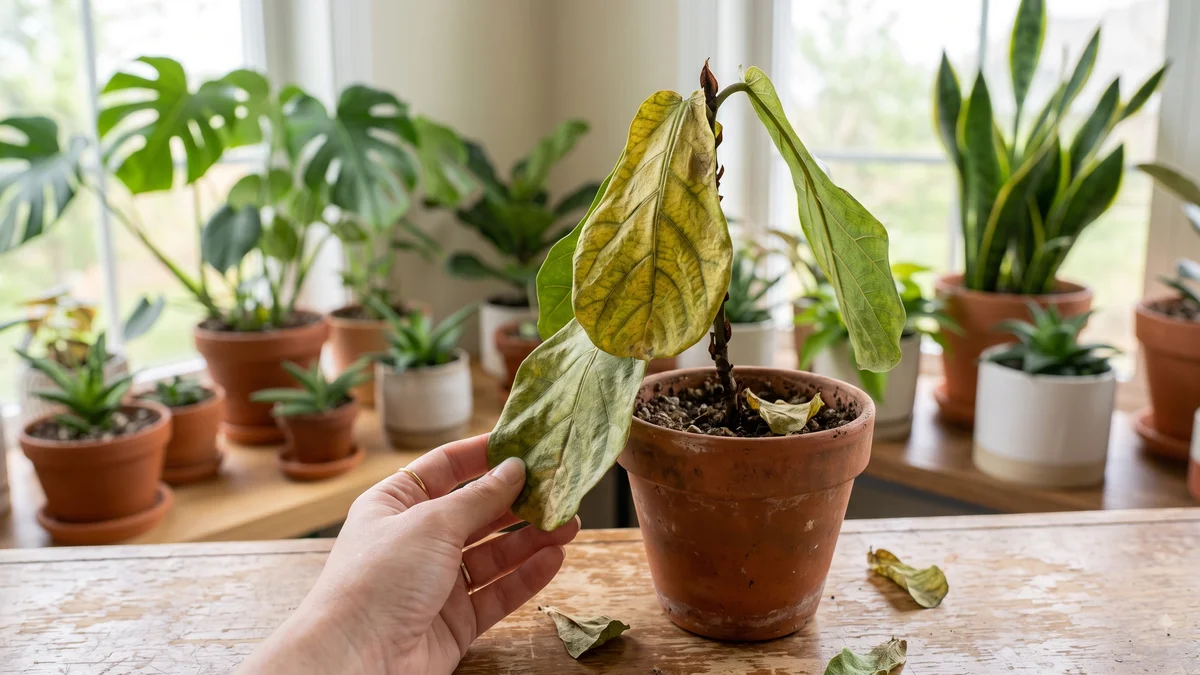
When a houseplant droops, reaching for the watering can is almost automatic. Normally, a thirsty plant perks back up within a few hours. When it stays limp—or droops even further—after a thorough drink, the problem is no longer a simple lack of water in the pot.
Plants stay upright through turgor pressure—the internal water pressure pushing outward against their cell walls. If your plant is still wilting in moist soil, something is blocking water from moving from the potting mix, through the roots, and up into the stems and leaves. Treating the wrong cause—especially adding more water to an already suffocating root ball—can turn a recoverable setback into a fatal one.
Common Signs and Symptoms
Pay close attention to how the leaves and soil behave right after watering. These secondary clues point directly to the underlying issue:
- Limp, yellowing leaves in wet soil: Classic sign that the roots are suffocating or decaying and can no longer absorb moisture.
- Water rushing straight out the drainage holes: If water pours out the bottom seconds after you start watering, the potting mix has likely dried out so thoroughly that it has become hydrophobic (water-repellent) and is channeling water down the edges of the pot without soaking the root ball.
- Drooping with crispy, dry leaf edges: Suggests the plant is root-bound, sitting in hot/dry air, or losing water through its leaves faster than the roots can replace it.
- Sudden collapse after moving or repotting: Indicates transplant shock or sudden temperature stress.
- Mushy stems at the soil line or a sour odor: Signals advanced root or stem rot.
Telling Similar Causes Apart
| Symptom | Overwatering / Root Rot | Hydrophobic Soil | Root-Bound Pot | Heat, Drafts, or Low Humidity |
| Soil feel | Heavy, soggy, slow to dry | Dry inside, even right after watering | Very little soil; mostly tangled roots | Normal moisture, dries quickly |
| Pot weight after watering | Very heavy | Surprisingly light | Dries out within 1–2 days | Normal |
| Leaf texture | Soft, limp, yellowing | Dry, papery, curling | Droopy, sometimes with brown tips | Wilted at midday; may recover at night |
| Root condition | Dark brown/black, mushy | Dry, brittle, intact | Tightly spiraled around the pot walls | Firm, healthy white or tan |
Main Causes of Drooping After Watering
1. Overwatering and Root Rot
This is the most common reason a plant wilts in wet soil. Roots need oxygen as much as they need water. When potting mix stays saturated—because of frequent watering, poor drainage, or a pot without drainage holes—roots suffocate and decay. Without functioning roots, the plant essentially dies of thirst while sitting in water.
2. Hydrophobic (Water-Repellent) Potting Mix
Peat-based and some peat-free potting mixes shrink away from the sides of the pot when allowed to dry out completely. Once bone dry, the mix actively repels water. You may pour plenty of water into the pot, watch it run out the bottom, and assume the plant is soaked—while the center of the root ball remains completely dry.
3. Severely Root-Bound Pots
When roots completely fill a container, there is not enough potting mix left to hold moisture. Even if you water thoroughly, the roots drink or drain what little water is available almost immediately, causing the plant to droop again within a day or two.
4. Transplant Shock or Environmental Stress
Repotting, disturbing delicate feeder roots, or moving a plant from a humid nursery or outdoor patio into a dry indoor room can cause temporary wilting. Similarly, placing a plant directly in front of a heating vent, air conditioner, or drafty winter window causes leaves to transpire water faster than the roots can pull it up.
5. Salt Buildup and Fertilizer Burn
Over-fertilizing or watering with hard or softened tap water leaves behind concentrated mineral salts in the potting mix. High salt levels damage fine root hairs and pull moisture away from the roots, resulting in persistent wilting.
6. Sap-Sucking Pests
Heavy infestations of spider mites, aphids, mealybugs, or scale insects drain sap directly from stems and leaves, causing foliage to yellow and droop even when soil moisture is right.
How to Identify the Exact Cause
Before taking action, run through these four quick checks:
-
Test the soil deep down: Push a finger 2 inches (5 cm) into the center of the pot—not just the edge. If it is soggy, suspect overwatering. If it is bone dry despite just watering, the soil is hydrophobic.
-
Lift the pot: A freshly watered pot should feel noticeably heavier. If it still feels light, water did not soak into the root ball.
-
Inspect the roots: Gently slide the plant out of its container. Healthy roots are firm and white or light tan. Dark, slimy roots indicate rot; dense, coiled roots with little soil mean it is root-bound.
-
Check the environment and foliage: Look under leaves for webbing or sticky residue (pests), and check for nearby radiators, AC vents, or cold drafts.
Step-by-Step Practical Solutions
Match your fix to what you found during inspection:
If the Soil Is Soggy (Overwatering or Root Rot)
-
Drain immediately: Empty any standing water from the saucer or decorative cachepot.
-
Trim damaged roots: Remove the plant from its pot, gently rinse away wet soil, and use clean, sharp scissors to cut off any brown, mushy roots.
-
Repot in fresh, airy mix: Scrub and disinfect the pot (1 part bleach to 9 parts water, then rinse well) or use a clean container with drainage holes. Repot into fresh, well-draining potting mix suited to the species.
-
Pause watering and fertilizing: Place the plant in bright, indirect light and wait until the top layer of soil dries before watering lightly again.
If the Soil Is Hydrophobic (Bone Dry Inside)
-
Bottom-water (soak) the pot: Place the pot in a sink or basin with a few inches of lukewarm water (roughly 17°C–22°C / 62°F–72°F).
-
Let it absorb: Leave it for 20 to 30 minutes until the surface of the soil feels damp to the touch.
-
Drain thoroughly: Remove the pot and let all excess water drip out completely before returning it to its saucer.
If the Plant Is Root-Bound
-
Upsize slightly: Move the plant into a pot 1 to 2 inches (2.5 to 5 cm) wider in diameter with good drainage.
-
Loosen the roots: Gently tease apart tightly coiled outer roots so they can grow into the fresh potting mix.
-
Water deeply: Soak the new mix thoroughly and allow it to drain.
If Salt Buildup or Transplant Shock Is the Cause
-
For salt buildup: Flush the pot slowly under lukewarm running water for several minutes to leach excess minerals out the bottom, or repot in fresh mix.
-
For transplant or temperature shock: Move the plant to a stable spot with bright, indirect light away from vents and drafts, and give it 1 to 2 weeks to re-establish without fertilizing.
Common Mistakes to Avoid
-
Watering again “just in case”: Adding more water to a drooping plant without checking the soil depth is the fastest way to kill an overwatered houseplant.
-
Using very cold or hot water: Extreme water temperatures shock tropical roots; always use lukewarm, room-temperature water.
-
Watering with softened tap water: Household water softeners add sodium that damages roots and worsens wilting.
-
Applying fertilizer to a wilted plant: Fertilizer salts burn stressed roots and make recovery harder. Wait until the plant is turgid and actively growing again.
How to Prevent Drooping After Watering
-
Water by feel, not by calendar: Check soil moisture a couple of inches down or judge the pot’s weight before watering.
-
Adjust for regional and seasonal conditions:
-
USA and Canada: Short winter days slow water uptake sharply, while forced-air heating dries out indoor air. Cut back on watering frequency from late autumn through early spring and keep plants away from heating vents and freezing window glass.
-
UK: Modern peat-free composts often dry out on the surface while remaining wet underneath—and if allowed to dry completely, they can be tricky to rewet. Checking pot weight is the most reliable habit.
-
Australia: During hot summers, indoor plants near bright windows or air conditioning can wilt quickly from rapid transpiration. In winter (June to August), reduce watering to prevent cold, soggy roots.
-
-
Use species-appropriate potting mix: Add perlite, pumice, or bark to standard potting mix for aroids and tropicals so air pockets stay open even after watering.
When Professional Gardening Advice May Be Needed
Most drooping issues resolve once soil moisture and root health are corrected. Consider consulting a local nursery, horticulturalist, or extension service if:
-
Stems turn black or collapse rapidly despite dry soil and good drainage, which may indicate a vascular fungal or bacterial disease.
-
Multiple unrelated plants droop simultaneously after using a new bag of potting mix or a new water source.
If a pest infestation or disease is confirmed and a chemical treatment is genuinely needed, use only a product registered for indoor ornamental plants in your region (EPA-registered in the USA, HSE-approved in the UK, PMRA-registered in Canada, or APVMA-registered in Australia) and follow all label instructions strictly.
Frequently Asked Questions
How long does it take a drooping plant to perk up after watering?
If the plant was simply underwatered and the soil absorbed the water properly, soft-stemmed plants like peace lilies or fittonias usually perk up within 2 to 6 hours. If there is no improvement after 24 hours, check for hydrophobic soil, root rot, or root-bound conditions.
Why does my plant droop every afternoon and perk up at night?
Temporary midday wilting happens when bright sun or warm air causes the leaves to lose water faster than the roots can supply it. As temperatures cool in the evening, turgor pressure recovers. Moving the plant slightly back from hot glass or increasing local humidity usually stops this cycle.
Can an overwatered, drooping plant be saved?
Yes, as long as some firm, healthy roots or intact stems remain. Removing rotted roots, repotting into fresh, airy mix, and adjusting your watering routine gives most resilient houseplants a strong chance of recovery.
Should I cut off drooping leaves?
Wait before pruning. If the leaves are still green, they may recover once root function stabilizes. Only remove leaves that have turned yellow, brown, or completely mushy.
Moving Forward
A houseplant that stays limp after watering is telling you that water is not making it from the pot into the foliage. Before reaching for the watering can again, check the soil deep in the pot, feel its weight, and inspect the roots. Fixing the underlying bottleneck—whether that means soaking hydrophobic soil, trimming rotted roots, or moving up a pot size—is the surest way to restore firm, upright growth.
Reliable Sources and Further Reading
- Clemson Cooperative Extension (HGIC) – Indoor Plants – Watering for practical guidance on checking soil moisture, rewetting dry potting mix, and avoiding overwatering.
- Clemson Cooperative Extension (HGIC) – Houseplant Diseases & Disorders for diagnosing wilting caused by root rot, pot-bound roots, and salt buildup.
- Royal Horticultural Society (RHS) – How to Help a Poorly Houseplant for UK-focused advice on peat-free composts, humidity, and winter watering.
- University of Minnesota Extension – Managing Insects on Indoor Plants for identifying and managing sap-sucking pests that cause wilting.
