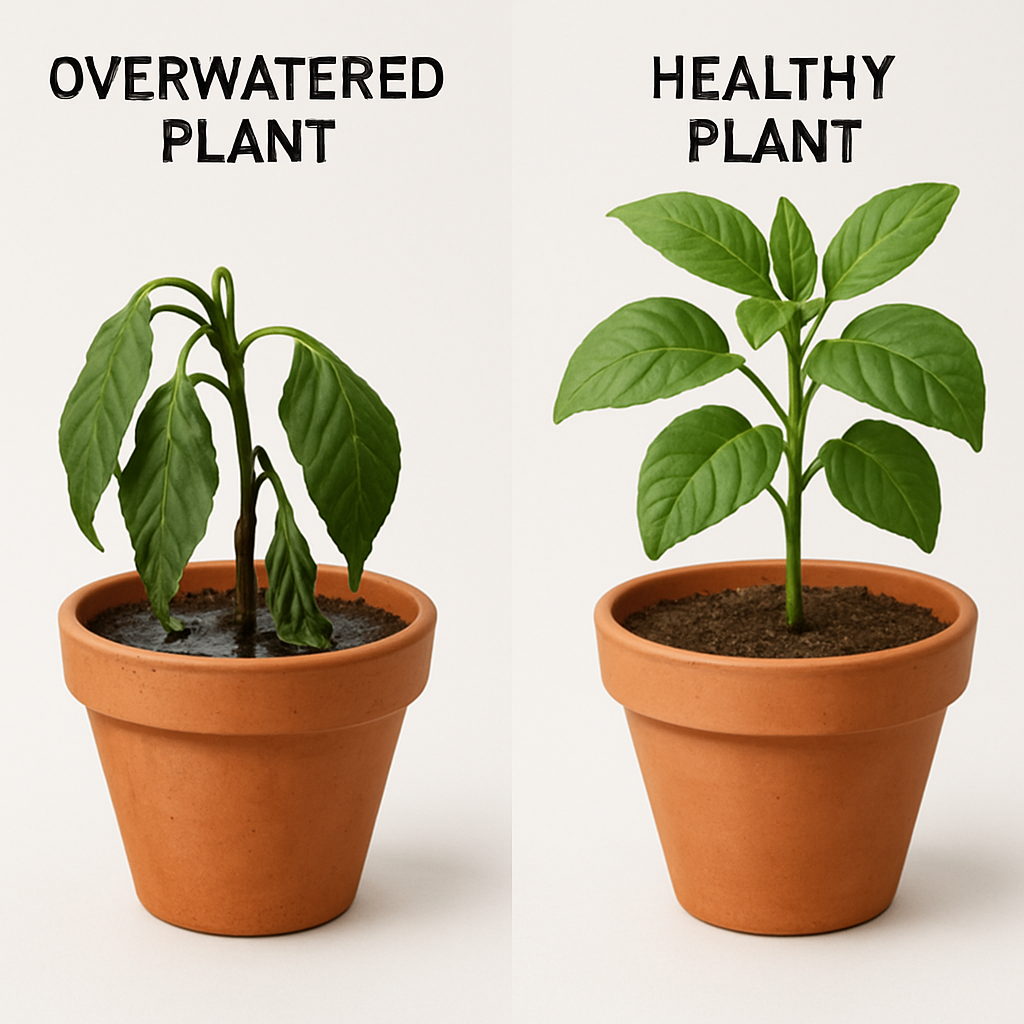
When a plant stem loses its rigid upright posture and becomes limp, spongy, or thin enough to bend under the weight of its own leaves, its internal structural support system is failing. Herbaceous plants rely on two mechanisms to stay upright: water pressure pushing outward against cell walls (turgor) and thickened, lignin-reinforced vascular fibers. When roots rot in stagnant soil, fungi invade the stem base, or low light forces rapid, thin cell elongation, those support structures collapse—sometimes gradually over weeks, and sometimes overnight.
Because a stem weakened by light deprivation can be corrected through pruning and brighter placement, whereas a stem rotting from soil-borne fungi requires immediate surgery or disposal, your first priority is inspecting the stem base and testing the firmness of the tissue.
Inspecting the Stem: Physical Clues to the Cause
Gently squeeze the stem at three points—just above the soil line, midway up the main stalk, and near the growing tips—while observing color, odor, and soil moisture.
| Stem Appearance & Feel | Location on Plant | Most Likely Cause | Immediate Prognosis |
| Dark brown or black, mushy, slimy; may smell sour | Base of stem at or just below soil level | Crown rot, stem rot, or damping-off (Pythium, Phytophthora, Rhizoctonia) | Irreversible in the rotted section; requires cutting healthy upper stems to propagate. |
| Pale green, thin, stretched with wide gaps between leaves | Upper and new stem growth leaning toward a window | Etiolation (insufficient light) combined with excess warmth | Recoverable by increasing light and pinching back weak tips. |
| Firm at the base, limp and rubbery near the tips | Soft new shoots and upper petioles | Acute underwatering or root rot preventing water transport | Recoverable within hours if underwatered; requires root inspection if soil is wet. |
| Water-soaked, dark green, collapsing overnight | Exposed outer stems and tender shoots | Chilling or frost injury | Damaged tissue will turn black and die; lower woody stems may resprout. |
| Hollowed, chewed, or oozing sawdust-like frass | Lower to mid-stem with tiny entry holes | Stem-boring insects (e.g., squash vine borer, iris borer, European corn borer) | Requires physical extraction of larvae or pruning below the entry tunnel. |
Six Primary Causes of Soft, Weak Stems
1. Root and Crown Rot from Saturated Soil
Overwatering and poor drainage are the leading triggers of mushy stems in potted houseplants—especially succulents (Echeveria, Crassula), snake plants (Dracaena trifasciata), peace lilies (Spathiphyllum), and newly potted seedlings. When potting mix or heavy garden clay stays waterlogged, oxygen is driven out of the soil pores. Root cells suffocate and decay, allowing water molds (Pythium and Phytophthora) to travel upward from the roots into the lower stem. Once fungal hyphae dissolve the cell walls inside the stem base, the plant collapses at soil level even though the upper leaves may still look green.
2. Damping-Off in Young Seedlings
Seedlings started indoors in cool, overly wet seed-starting mix or crowded trays frequently topple over as their stems pinch inward into a thread-like, water-soaked constriction right at the soil surface. Caused by soil-borne fungi including Rhizoctonia solani and Fusarium species, damping-off kills young seedlings rapidly and cannot be reversed once the stem collapses.
3. Severe Light Deficiency (Etiolation)
When sun-loving vegetables, herbs, or indoor foliage plants grow in dim light, plant hormones (auxins) trigger rapid vertical cell elongation as the plant searches for brightness. The resulting stems are pale, narrow, and thin-walled because the plant lacks the photosynthetic energy needed to build sturdy cellulose and lignin. These stretched stems quickly bend over under the weight of their own foliage.
4. Excess Nitrogen and Lack of Air Movement
Fertilizing heavily with high-nitrogen synthetic feeds pushes rapid, succulent shoot growth with large, thin-walled cells that lack structural fiber. Indoors or inside sheltered greenhouses, plants grown in completely still air also develop weaker stems than outdoor plants; gentle wind sway naturally stimulates plants to produce thicker, stronger supportive tissue (thigmomorphogenesis).
5. Cold Stress and Frost Damage
Exposing warm-season garden crops—such as tomatoes (Solanum lycopersicum), basil (Ocimum basilicum), and dahlias—or tropical houseplants near drafty winter windows to temperatures near or below freezing causes water inside stem cells to expand and rupture cell membranes. Once the tissue thaws, the stem turns limp, translucent, and mushy.
6. Stem-Boring Pests
In outdoor vegetable and perennial beds across North America, Europe, and Australia, larvae of moths and beetles tunnel directly inside hollow or pithy stems. Squash vine borers (Melittia cucurbitae) on cucurbits and stem borers on dahlias, irises, and tomatoes sever the internal vascular bundles, causing seemingly well-watered stems to wilt and soften midway up the plant.
How to Save a Plant with Weak or Soft Stems
Your response depends entirely on whether the stem tissue is still alive and firm or actively rotting.
Scenario A: The Stem Base Is Mushy and Dark (Stem or Crown Rot)
A blackened, mushy stem section cannot heal or carry water again. Act quickly to salvage the healthy upper portion of the plant:
-
Cut well above the rot: Using clean, sharp shears or a razor blade sterilized with 70% isopropyl alcohol, slice through the stem at least 2 to 3 centimeters (1 inch) above any discolored or soft tissue. Inspect the cut cross-section—it should be solid white or bright green with no brown rings or dark streaks in the center. If brown streaks remain, sterilize your blade and cut higher.
-
Propagate healthy stem cuttings: Allow succulent cuttings to dry on a clean surface for two to four days until a protective callus forms over the cut end before setting them in dry, gritty potting mix. For tropical foliage plants such as pothos (Epipremnum), philodendron, or monstera, place cuttings with at least one leaf node in clean water or moist perlite to root.
-
Discard infected soil and sanitize pots: Never reuse potting mix from a plant killed by stem or root rot. Scrub the empty pot with hot, soapy water and disinfect it with a 10% household bleach solution (1 part bleach to 9 parts water) for 10 minutes before rinsing thoroughly.
Scenario B: Stems Are Thin, Pale, and Leggy—Not Rotting
If the stem base is firm and healthy but the upper growth is stretched and floppy:
-
Increase light intensity gradually: Move indoor plants closer to a bright east- or south-facing window (north-facing in the Southern Hemisphere) or place a full-spectrum LED grow light 15 to 30 centimeters (6 to 12 inches) above seedlings and herbs for 12 to 14 hours daily.
-
Pinch or prune back stretched tips: Cut long, weak stems just above a healthy leaf node to encourage the plant to push sturdier side shoots from lower down.
-
Add gentle airflow and temporary support: Stake heavy-headed stems loosely with bamboo canes and soft plant ties while new growth strengthens. Running an oscillating fan on low across indoor seedlings or houseplants for a few hours daily encourages thicker stem walls.
-
Pause high-nitrogen feeding: Switch to a balanced, low-dose fertilizer only during active spring and summer growth, and allow the top few centimeters of soil to dry between waterings so roots grow deep and firm.
Scenario C: Outdoor Stems Are Wilting with Small Holes or Frass
-
Check for entry wounds: Look near the base of squash, pumpkin, or dahlia stems for wet, sawdust-like insect droppings (frass).
-
Extract borers carefully: On sturdy cucurbit stems, slice lengthwise along the stem with a sterile blade just above the frass hole, remove the pale caterpillar inside, and immediately mound moist garden soil over the wounded stem section so it can form secondary roots.
Preventing Weak Stems Across Seasons
Building strong stem structure begins with matching soil drainage, light, and seasonal care to the plant’s biology:
-
Use well-aerated potting media: Amend standard indoor potting soil with 20% to 30% perlite, pumice, or coarse pine bark for foliage plants, and at least 50% mineral grit for succulents and cacti so excess water drains within seconds.
-
Give seedlings strong overhead light from day one: In cool-spring regions of Canada, the UK, the northern US, and southern Australia, window light in late winter is rarely strong enough for vegetable seedlings. Position fluorescent or LED shop lights 5 to 10 centimeters (2 to 4 inches) above emerging seedlings and raise them as plants grow.
-
Water deeply, then let the upper root zone dry: Constant surface moisture encourages shallow roots and fungal collar rot. Water thoroughly until excess drains from the pot bottom, empty saucers after 15 minutes, and wait until the top 2 to 5 centimeters (1 to 2 inches) of soil dry before watering again.
Frequently Asked Questions
Can a bent or kinked plant stem heal if I splint it? If a green, non-rotting stem bends accidentally without snapping completely through its outer vascular bundle, splinting it upright with a wooden skewer and soft garden tape often allows the plant to reinforce the damaged area with callus tissue within two to three weeks. However, if the bend is caused by fungal rot or mushy decay, splinting will not save it.
Why did my store-bought basil or supermarket herbs flop over within days of bringing them home? Commercial greenhouse herbs are grown under intense supplemental lighting with liquid fertilizers and dozens of seedlings crowded into a single small pot. Once placed in a dimmer home kitchen, the crowded roots compete for moisture and the soft, high-nitrogen stems collapse. Dividing the pot into two or three smaller containers, pruning back the tallest tips by one-third, and placing them in bright sun restores sturdy growth.
Is cinnamon powder effective for stopping stem rot on seedlings? Ground cinnamon has mild natural antifungal properties and can help dry out the surface of minor damp spots on seed-starting mix, making it useful as a light preventive dusting on healthy soil. However, once fungal damping-off or crown rot has visibly darkened and softened a stem, cinnamon cannot penetrate the tissue to cure the infection.
Sources and Further Reading
-
University of Minnesota Extension: Damping-Off of Seedlings — https://extension.umn.edu/solve-problem/damping
-
Royal Horticultural Society (RHS): Foot and Root Rots — https://www.rhs.org.uk/disease/foot-and-root-rots
-
Clemson Cooperative Extension Home & Garden Information Center: Squash Vine Borer (HGIC 2207) — https://hgic.clemson.edu/factsheet/squash-vine-borer/
-
Missouri Botanical Garden: Overwatering and Root Rot in Houseplants — https://www.missouribotanicalgarden.org/gardens-gardening/your-garden/help-for-the-home-gardener/advice-tips-resources/insects-pests-and-problems/environmental/overwatering
