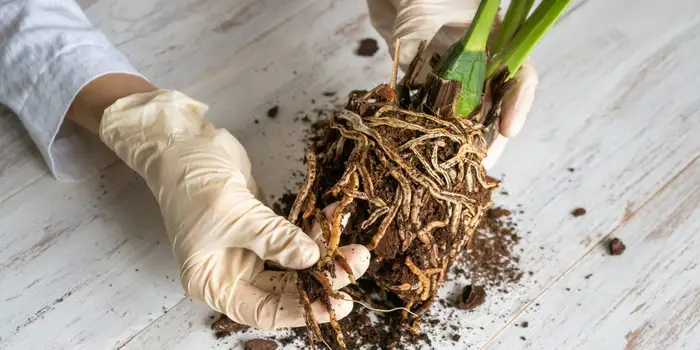
Few houseplant problems feel as frustrating as watching a once-healthy plant wilt in wet soil. When you water it again, expecting it to perk up, it only gets worse. That contradiction is the classic calling card of root rot—a condition where oxygen-starved roots begin to decay, leaving the plant unable to absorb water or nutrients even when the potting mix is soaked.
Root rot is not a single disease with one simple cure. It is a breakdown of the root system driven by excess moisture, poor aeration, and soil-borne pathogens such as Pythium, Phytophthora, Fusarium, and Rhizoctonia. Left unchecked, it can kill a houseplant in a matter of weeks. Caught early, however, many plants can recover with careful pruning, fresh potting mix, and a change in watering habits.
Common Signs and Symptoms of Root Rot
Because the damage happens below the soil line, above-ground symptoms are usually the first clue. Unfortunately, many of these signs look almost identical to underwatering.
-
Wilting in moist soil: Leaves droop and feel limp even though the potting mix is damp or wet to the touch.
-
Yellowing leaves (chlorosis): Lower leaves typically turn yellow first, often feeling soft or mushy rather than crisp and dry.
-
Stunted or halted growth: New shoots fail to emerge during the active growing season, or new leaves appear noticeably smaller than usual.
-
Soft, dark stems: In advanced cases, rot travels up from the roots into the base of the stem, turning it brown, black, or mushy.
-
Sour or swampy odor: A foul, earthy smell coming from the pot indicates anaerobic (oxygen-deprived) conditions and decaying organic matter.
-
Mushy, dark roots: When removed from the pot, affected roots look brown or black, feel slimy, and easily slip off their outer layer (the cortex), leaving a thin, stringy core behind.
Root Rot vs. Similar-Looking Problems
Treating the wrong issue will only stress the plant further. Before unpotting, compare the symptoms carefully:
Main Causes of Root Rot
Root rot almost always starts with a lack of oxygen in the root zone. Healthy roots need both moisture and air pockets to function. When water fills all the pore spaces in the potting mix for too long, roots suffocate and die back, creating an easy entry point for water molds and fungi.
-
Overwatering: Watering on a rigid calendar schedule rather than checking soil moisture is the most common trigger.
-
Poor drainage: Pots without drainage holes—or decorative cachepots that trap runoff water at the bottom—keep the lower roots sitting in standing water.
-
Dense or degraded potting mix: Standard garden soil is far too heavy for containers. Even quality potting mix breaks down over time, compacting and holding too much water.
-
Oversized pots: Placing a small root ball into a much larger pot leaves excess wet soil around the roots that the plant cannot drink fast enough.
-
Low light and cool temperatures: Plants use significantly less water in dim rooms or during winter dormancy. Watering at summer frequency during darker months quickly leads to waterlogged soil.
How to Identify the Exact Cause
Visual inspection of the roots is the only way to confirm root rot with certainty. Gently tip the pot on its side, support the base of the plant with your hand, and slide the root ball out.
Shake or rinse away loose potting mix so you can see the roots clearly. Healthy roots are firm and typically white, cream, or light tan (though some species, like certain ferns or Calathea, naturally have darker roots that still feel firm and fibrous). Rotted roots are dark, mushy, and break apart with gentle pressure.
Once you confirm rot, look at the environment to pinpoint why it happened:
-
Check the pot: Is there a drainage hole? Was water sitting in the saucer?
-
Check the soil: Does it feel like heavy mud, or is it light and airy?
-
Check the root-to-pot ratio: Is the root ball tiny compared to the volume of soil?
-
Check the light: Has the plant been sitting far from a window, especially during autumn and winter?
Step-by-Step Practical Solutions
If a plant still has at least some firm, healthy roots—or healthy stems that can be propagated—it is worth trying to save.
1. Remove the Plant and Clean the Roots
Take the plant out of its pot and gently tease away as much wet potting mix as possible. Rinse the remaining soil off under lukewarm, gentle running water so you can clearly distinguish healthy tissue from rotted tissue.
2. Prune Away All Rotted Roots
Using clean, sharp pruners or scissors, cut away every soft, blackened, or slimy root. Make your cuts just above the damaged section into firm, healthy tissue. Wipe the blades with rubbing alcohol (70% isopropyl alcohol) between cuts if the rot is severe, to avoid spreading pathogens to healthy roots.
3. Trim Back Foliage If Needed
If you had to remove a large portion of the root system (more than a third), the remaining roots may struggle to support a full canopy of leaves. Prune away any yellow, damaged, or heavily wilted leaves to reduce water loss through transpiration.
4. Disinfect or Replace the Pot
Never put a recovering plant back into a dirty pot. If reusing the same container, scrub it thoroughly with warm soapy water, then soak or wipe it with a diluted bleach solution (1 part household bleach to 9 parts water) and rinse well. Choose a pot that fits the newly reduced root ball snugly—with at least one clear drainage hole.
5. Repot in Fresh, Well-Draining Mix
Discard the old potting mix completely; do not reuse it for other plants. Repot into a fresh, airy mix suited to the species:
-
Tropical foliage plants (e.g., Monstera, Philodendron, Pothos): Standard houseplant mix amended with perlite, pumice, or orchid bark for extra airflow.
-
Succulents and cacti: A gritty cactus and succulent mix with high mineral content.
-
Aroids and epiphytes: Chunky, bark-heavy blends that dry quickly.
6. Water Lightly and Adjust Care
After repotting, water lightly just to settle the new mix around the roots—unless you are repotting a succulent or cactus, in which case you should wait 3 to 5 days before watering so cut root ends can callus over. Place the plant in bright, indirect light (avoiding harsh direct sun) and hold off on fertilizer until you see clear signs of new growth.
A Note on Fungicides and Hydrogen Peroxide
Home remedies like diluted hydrogen peroxide are frequently recommended online, but they are not a substitute for removing rotted tissue and fixing drainage. Commercial fungicides labeled for indoor root rot are rarely necessary for home growers and will not revive already-dead roots. If you do consider a chemical treatment, check that it is explicitly registered for indoor ornamental use in your region (EPA-registered in the USA, HSE-approved in the UK, PMRA-registered in Canada, or APVMA-registered in Australia) and follow all label instructions strictly.
Common Mistakes to Avoid
-
Adding gravel or pebbles to the bottom of a pot: Contrary to popular myth, a layer of stones at the bottom of a pot does not improve drainage. It actually raises the “perched water table,” bringing the saturated zone closer to the roots.
-
Fertilizing a sick plant: Fertilizer salts can burn already-compromised roots and encourage further stress. Wait until the plant is actively growing again.
-
Leaving rotted roots behind: Even a small section of decaying root can continue to harbor pathogens and spread back into healthy tissue.
-
Repotting into a pot that is too big: After trimming away dead roots, you will often need to downsize the pot, not upsize it.
How to Prevent Root Rot
Prevention comes down to matching water, light, and potting mix to your specific plant and home environment.
-
Check the soil before watering: Push a finger 1 to 2 inches (2.5 to 5 cm) into the potting mix, or lift the pot to judge its weight. Water only when the soil has dried to the level appropriate for that species.
-
Empty saucers promptly: Never let a pot sit in runoff water for more than 15–30 minutes.
-
Adjust for seasons and regional climates:
-
USA and Canada: In northern states and across Canada, short winter days slow plant growth dramatically, while indoor heating dries the air. The soil surface may look dry while the bottom remains wet—always check deeper before watering.
-
UK: Peat-free potting composts are now standard across the UK. These mixes often dry out on the surface faster than peat-based mixes while retaining moisture underneath, so checking the weight of the pot is especially reliable.
-
Australia: Remember that dormancy falls between June and August. In humid coastal regions (such as Brisbane or Sydney), potting mixes take longer to dry than in drier inland or southern areas, making airflow and chunky soil amendments even more important.
-
-
Match the pot material to your habits: Unglazed terracotta pots breathe and pull moisture out of the soil, making them ideal for heavy-handed waterers or drought-tolerant plants. Plastic and glazed ceramic pots retain moisture longer.
When Professional Gardening Advice May Be Needed
Most cases of houseplant root rot can be handled at home. However, consider consulting a local nursery, horticulturalist, or regional extension service if:
-
Multiple plants in different pots develop rot simultaneously despite proper watering, which may point to contaminated potting mix or a broader environmental issue.
-
A high-value, rare, or heirloom plant is declining and you want species-specific propagation or treatment advice.
-
You suspect a persistent vascular disease (such as Fusarium wilt), where stems show internal discoloration even when roots appear relatively intact.
In the USA and Canada, Master Gardener programs and university extension offices offer free or low-cost diagnostic help. In the UK, the Royal Horticultural Society (RHS) provides advisory services for members, and in Australia, state botanic gardens and local specialist nurseries are reliable resources.
Frequently Asked Questions
Can a houseplant survive if all its roots are rotted?
If every root is mushy and black, the original root system cannot be saved. However, if the plant still has firm, healthy stems or leaves (as with Pothos, Monstera, Philodendron, or many succulents), you can take stem cuttings above the rot and propagate them in water or fresh, lightly moistened potting mix to grow a new plant.
Should I let the roots dry out before repotting?
For succulents, cacti, and thick-rooted plants like Zamioculcas (ZZ plant), letting trimmed roots air-dry for 24 to 48 hours helps the cuts callus and reduces the risk of reinfection. For thin-rooted tropical plants like ferns or Calathea, do not let the roots dry out completely; repot them promptly into lightly moistened, airy mix.
How long does it take a houseplant to recover from root rot?
Recovery depends on the species, the extent of the damage, and the time of year. During spring and summer, a plant may stabilize within 2 to 4 weeks and push out new growth within a couple of months. In autumn or winter, recovery is much slower, and the plant may simply hold steady until daylight increases.
Does cinnamon cure root rot?
Cinnamon has mild natural antifungal properties and is sometimes dusted onto cut stems or roots to help dry out wounds. While harmless in small amounts, it will not cure active root rot on its own—pruning dead tissue and correcting moisture and drainage are what actually solve the problem.
Moving Forward
Fixing root rot is less about finding a miracle treatment and more about restoring the basic balance of air and water around your plant’s roots. Once you remove the decayed tissue, switch to a well-draining potting mix, and start watering based on soil moisture rather than a fixed schedule, most resilient houseplants will gradually rebuild their root systems. Going forward, treating drainage and light as the foundation of your watering routine is the simplest way to keep root rot from returning.
Reliable Sources and Further Reading
For further region-specific guidance on houseplant care and root diseases, consult these established horticultural organizations:
-
University of Minnesota Extension – Resources on houseplant care, watering practices, and diagnosing root and stem rots.
-
Missouri Botanical Garden – Plant Finder and indoor gardening guides covering species-specific soil and drainage needs.
-
Royal Horticultural Society (RHS) – Practical UK-focused advice on houseplant watering, peat-free composts, and root rot management.
-
Master Gardeners of Ontario / University of Guelph – Canadian seasonal indoor plant care and pest/disease diagnostics.
-
ABC Gardening Australia – Australian climate-adapted advice on potting mixes, indoor plant maintenance, and seasonal watering.
